The Global Climate and Weather Observatory at BRCSI
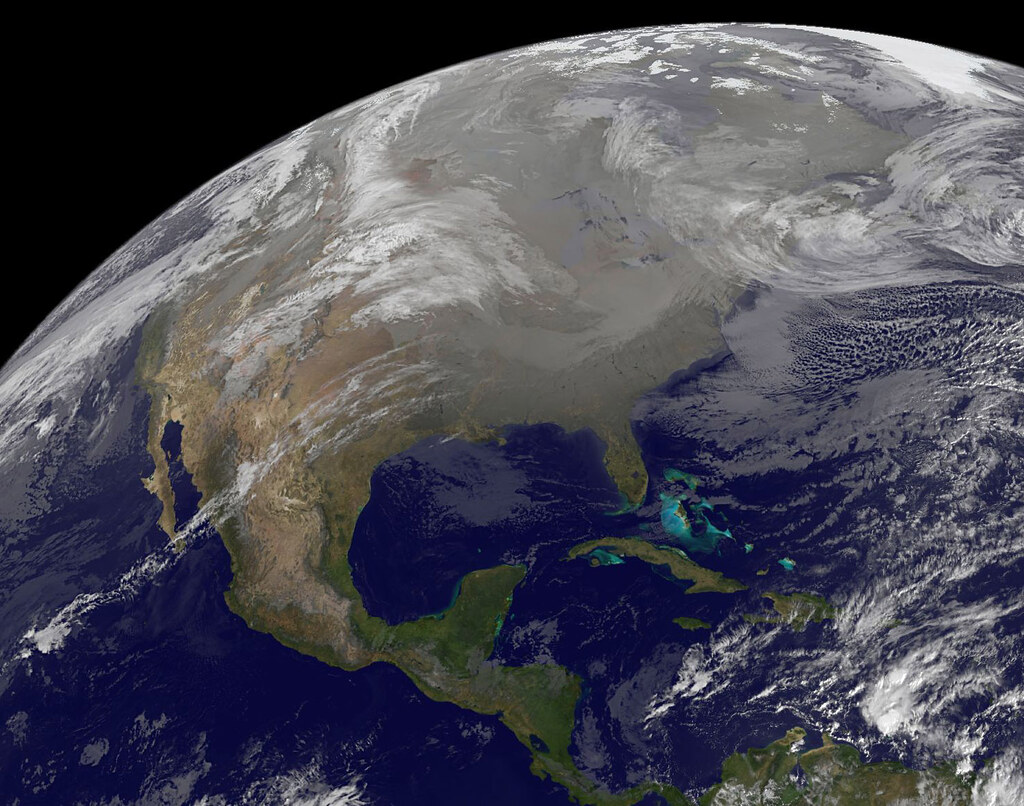
Global Climate and Weather Research Center
The Global Climate and Weather Observatory at BRCSI aims to serve as a comprehensive climate and weather monitoring and research facility. This observatory will integrate data from advanced technologies and methodologies to advance our understanding of climate dynamics, atmospheric processes, and weather phenomena on a global scale.
Objectives and Goals
- Data Collection: Establish a robust network of weather stations and remote sensing technologies to collect high-resolution climate data, including temperature, humidity, precipitation, and atmospheric pressure.
- Research and Development: Foster interdisciplinary research that leverages climate models, remote sensing, and big data analytics to improve climate predictions and assess climate change impacts.
- Public Engagement: Develop educational programs and outreach initiatives to increase public awareness of climate change, weather forecasting, and sustainable practices.
Infrastructure and Technology
- Satellite Systems: Utilize data from advanced satellite technology for real-time data acquisition, enhancing spatial coverage and timeliness of weather forecasts.
- Ground Stations: Utilize a distributed network of ground-based observatories equipped with cutting-edge sensors for localized data collection.
- Computing Facilities: Establish high-performance computing capabilities to run complex climate models and perform extensive data analysis.
Analytical Framework
- Integrated Climate Models: Implement state-of-the-art climate models that account for various factors such as land use, ocean currents, and greenhouse gas emissions to provide accurate predictions.
- Data Analytics: Utilize machine learning algorithms and artificial intelligence for data processing and pattern recognition, facilitating the identification of climate trends.
Collaboration and Partnerships
- Global Collaborations: Form alliances with international climate organizations, universities, and research institutions to enhance research capabilities and data sharing.
- Government and Policy Support: Work closely with governmental bodies to inform climate policies and adaptive strategies based on research findings.
Impact on Climate Science
The observatory aims to be a central hub for climate research, contributing significantly to global efforts in understanding and combating climate change. By providing reliable data and insights, the BRCSI observatory will play a vital role in shaping climate policy and fostering sustainable practices worldwide.
The establishment of a Global Climate and Weather Observatory at BRCSI represents a transformative step toward addressing the pressing challenges of climate change. Through innovative research, cutting-edge technology, and collaborative efforts, this observatory will substantially contribute to our understanding of climate systems and the implementation of effective mitigation strategies.

Photo by Pixabay on Pexels.com
Climate Change: Analysis & Mitigation
What is climate change?
Climate change is real. Rising air and ocean temperatures, increasing average sea levels, shrinking glaciers, changes in Earth’s biological and physical systems – all measurable and direct evidence of the fact that our climate is changing. 97% of scientists from around the world are in agreement that the evidence shows a striking correlation between human activity and climate change. In addition to understanding the likelihood that human activity is drastically changing the climate, it is important to understand that the evidence by itself does not lie. Average global temperatures are rising – that’s a fact. The average amount of carbon dioxide in the atmosphere is rising. That is also a fact. There is no question that it is happening. The earth is a complex system of interacting phenomena. The questions we need answers to are: how fast is it changing? What are the specific principal drivers of change? What can we expect to happen and where? How predictable are climate models going to be given so many variables? How much time do we have until conditions become unmanageable? And finally, what can we do to prepare? We are at a point where we can no longer dwell on whether or not climate change is real. We need to act fast and act together.
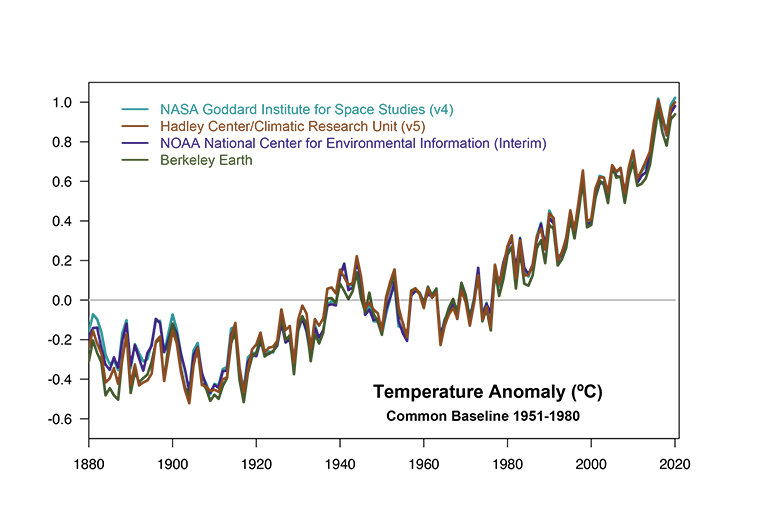
“Temperature data showing rapid warming in the past few decades, the latest data going up to 2020. According to NASA, 2016 and 2020 are tied for the warmest year since 1880, continuing a long-term trend of rising global temperatures. The 10 warmest years in the 141-year record have occurred since 2005, with the seven most recent years being the warmest.” – NASA Image Credit: NASA’s Goddard Institute for Space Studies Website: Scientific Consensus | Facts – Climate Change: Vital Signs of the Planet (nasa.gov)
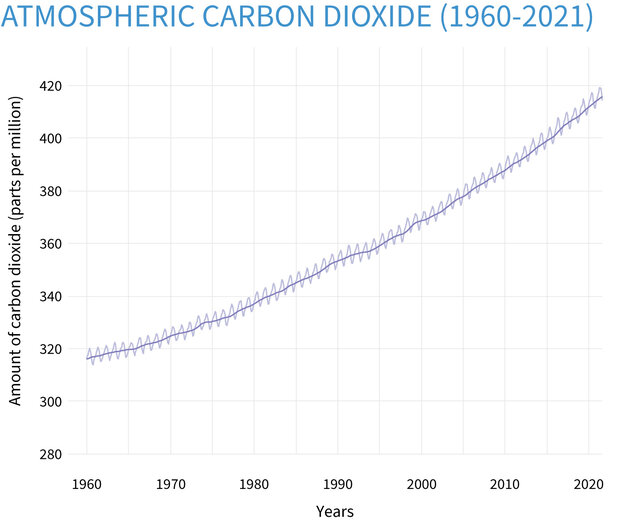
Image Credit: NOAA Climate.gov image, based on data from NOAA Global Monitoring Lab.
“The modern record of atmospheric carbon dioxide levels began with observations recorded at Mauna Loa Observatory in Hawaii. This graph shows the station’s monthly average carbon dioxide measurements since 1960 in parts per million (ppm). The seasonal cycle of highs and lows (small peaks and valleys) is driven by summertime growth and winter decay of Northern Hemisphere vegetation. The long-term trend of rising carbon dioxide levels is driven by human activities.” – NOAA
 brcsi.org